

By: Zen Physiotherapy Intern Joseph Lo (BA, MPT student)
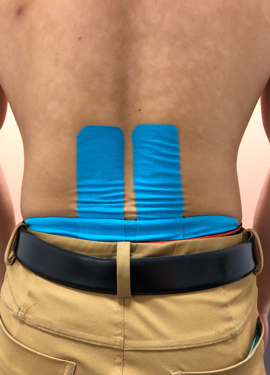
In this blog we highlight what Kinesio Tape is, the various brands and indications or contraindications for its use. We explore the current literature and what the researchers are saying in regard to the effectiveness of this modality.
What is Kinesio Tape?
Elastic therapeutic tape is a waterproof, elastic, and adhesive tape that is used in both athletic and clinical setting for treating musculoskeletal injuries. It is commonly known as Kinesio Tape due to this brand being the first brand to produce this type of tape. Currently, there are many different brands of therapeutics tape on the market such as: Rock tape, KT tape, Chatt Tape, Leukotape and Strength Tape. All of these brands follow the same basic idea as above, but they do vary in their level of adhesive and tension. In recent years, Kinesio Tape has become popularized in the athlete world where thousands of athletes across the world in various sports are applying these tapes for competitions such as: James Harden, Novak Djokovic and Kerri Walash Jennings.

Indications for use
Kinesio Tape brands have claimed that elastic therapeutic tape can be used to decrease pain, decrease swelling and inflammation, normalize muscle tone and delay fatigue. It does this by creating a lifting effect underneath the skin which can help decompress the swelling and the muscles underneath.
There are no major side effects from applying tape onto the skin besides the risk of skin irritation such as rash or itchiness after removing the tape from the skin. The only contraindication towards having tape applied is if you are allergic to adhesives.
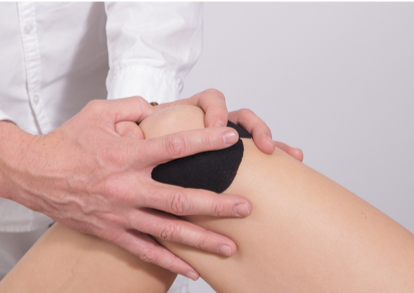
What does the current research show us on the effectiveness of elastic therapeutic tape?
- Nicole (2016) concluded through a systematic review and found that that using Kinesio Tape as an adjunctive treatment to physiotherapy can improve pain in individuals with chronic lower back pain.
- Both Marik (2012) and Ristow (2013) found that therapeutic taping reduced limb circumference and upper body lymphedema when applied over areas of swelling. Swelling was reduced by a greater amount and in a shorter time compared to not applying any tape over the same area in patients.
- Wegener (2016) performed a randomized control trial to see the effective of elastic therapeutic tape, sham and eccentric exercise alone for treating lateral elbow tendinosis. In his findings, he found that there was no significant difference between treatment groups. All groups improved in overall function and pain which meant that exercise and natural healing could have been the cause.
- Brogden (2018) conducted a random crossover study looking at athletes and the effects of using elastic therapeutic taping on ankle function and performance. The study looked at 12 soccer athletes and found improvement in proprioceptive performance (joint awareness) but no improvements in postural stability, function and pain.
- Both Mostafavifar (2012) and Li (2018) conducted different meta-analysis on the application of Kinesio Tape and the effects on various musculoskeletal injuries. Both authors found that Kinesio Tape provided short term pain relief in the first 24 hours of application but that there was no long-term pain relief (past 1 week). In particular, Li’s (2018) meta-analysis on self-reported pain and application of Kinesio Tape for treating knee osteoarthritis demonstrated that patients had a clinically significant decrease in self-reported pain during activity and knee mobility.
Overall all the authors supported the idea that elastic therapeutic tape is a good option as an adjunct treatment to try due to it being low cost, non-invasive, with no major side effects. All authors also concluded that more evidence using larger sample sizes and randomized control trial studies are needed to be conducted to further support the findings in the current research.
If you have any questions about Kinesio Tape or want to give it a try, please reach out to our amazing Zen team on our contacts page!
References
Brogden, C., Marrin, K., Page, R., & Greig, M. (2018). The efficacy of elastic therapeutic tape variations on measures of ankle function and performance. Physical Therapy in Sport, 32, 74–79. https://doi.org/10.1016/j.ptsp.2018.04.019
George, C., Heales, L., Stanton, R., Wintour, S., & Kean, C. (2018). The immediate effects of therapeutic tape on pain and function in lateral epicondylalgia: A systematic review. Journal of Science and Medicine in Sport, 21, S90–S91. https://doi.org/10.1016/j.jsams.2018.09.207
Li, X., Zhou, X., Liu, H., Chen, N., Liang, J., Yang, X., … Li, X. (2018). Effects of Elastic Therapeutic Taping on Knee Osteoarthritis: A Systematic Review and Meta-analysis. Aging and Disease, 9(2), 296–308. https://doi.org/10.14336/AD.2017.0309
Mostafavifar, M., Wertz, J., & Borchers, J. (2012). A Systematic Review of the Effectiveness of Kinesio Taping for Musculoskeletal Injury. The Physician and Sportsmedicine, 40(4), 33–40. https://doi.org/10.3810/psm.2012.11.1986
Nelson, N. (2016). Kinesio taping for chronic low back pain: A systematic review. Journal of Bodywork & Movement Therapies, 20(3), 672–681. https://doi.org/10.1016/j.jbmt.2016.04.018
Marik, T. (2012). A Systematic Review of Therapeutic Taping for the Upper Extremity. Journal of Hand Therapy, 25(4), e11–e12. https://doi.org/10.1016/j.jht.2012.07.016
Ristow, O., Hohlweg-Majert, B., Kehl, V., Koerdt, S., Hahnefeld, L., & Pautke, C. (2013). Does Elastic Therapeutic Tape Reduce Postoperative Swelling, Pain, and Trismus After Open Reduction and Internal Fixation of Mandibular Fractures? Journal of Oral and Maxillofacial Surgery, 71(8), 1387–1396. https://doi.org/10.1016/j.joms.2013.03.020
Wegener, R., Brown, T., & O’brien, L. (2016). A randomized controlled trial of comparative effectiveness of elastic therapeutic tape, sham tape or eccentric exercises alone for lateral elbow tendinosis. Hand Therapy, 21(4), 131–139. https://doi.org/10.1177/1758998316656660